The AI and the Era of the New Enlightened — Part II
Part II of the series to demystify Artificial Intelligence: from the automata of Jaquet-Droz to language models, why an LLM does not understand words the way a human being does, and the risk of replacing thought with speed of execution.
Demystifying Artificial Intelligence — Part II
I was really looking forward to writing this second installment.
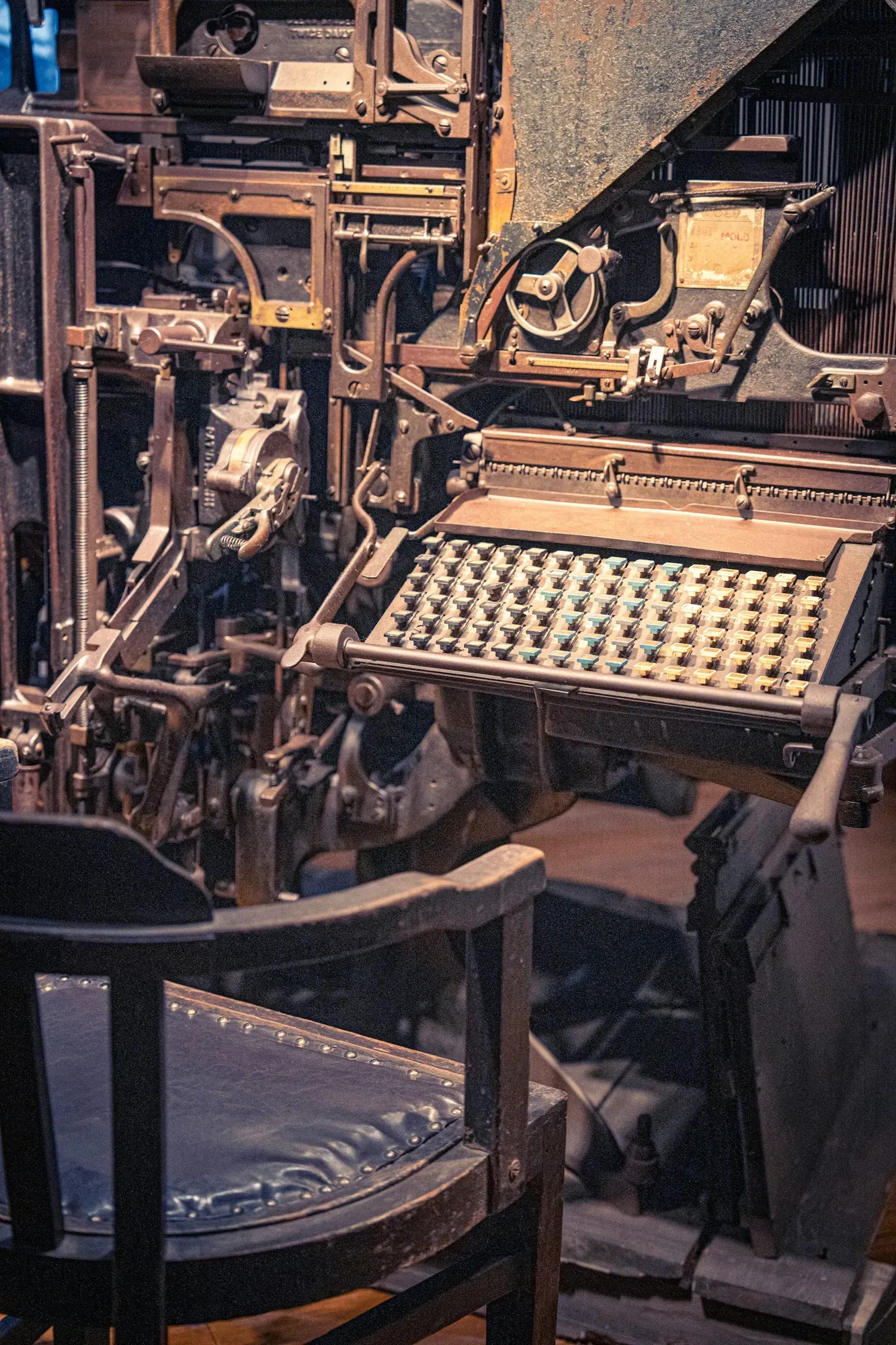
In fact, I had spent weeks preparing it. I had read about the automata of the eighteenth century, searched for books, watched documentaries, and gathered notes. My intention was to speak about those extraordinary machines that amazed Europe to the point of making many believe that humanity had reached a new form of intelligence. I wanted to tell how a set of gears, cams, and springs was capable of convincing a society that a machine could think.
If you have never seen Jaquet-Droz’s Writer or the Draughtsman, I recommend devoting a few minutes to them. It is not wasted time. They are fascinating pieces of engineering and, at the same time, a reminder that we human beings tend to overinterpret that which we do not yet understand.
That was the original idea of this essay. I wanted to use them as an analogy to explain why a language model does not understand words the same way we do. However, while I was preparing the text, something happened that ended up completely changing the subject I really needed to write about.
A new normal arrived.
Not only in my work, but in practically the entire technology industry. And I suspect it will not take long to spread to the rest of the professions.
Suddenly it began to be assumed that, because Artificial Intelligence now exists, everything should be done faster. Five times faster. Ten times faster. Even twenty times faster. The curious thing is that no one seems capable of explaining what that number really means. When a car travels at a hundred kilometers per hour, there is a unit that allows us to measure it. When a factory doubles its production, there are objective indicators to demonstrate it. But when someone claims that a team develops software ten times faster thanks to AI, there is almost never an equivalent parameter. It is a feeling turned into business strategy.
I do not blame Artificial Intelligence.
It would be unfair to do so.
AI fulfills exactly the function for which it was designed. With good planning it can become an extraordinary executor. It summarizes documents, generates repetitive code, organizes information, drafts documents, and accelerates countless tasks. It would be absurd to deny its usefulness.
The problem appears when we stop seeing it as a tool of execution and begin to use it as a substitute for thought.
For centuries, tools extended our physical capacities. The wheel allowed us to transport more weight than our arms could bear. The engine covered distances impossible for our legs. The excavator moved mountains that we could never have shifted with our hands.
Artificial Intelligence represents something different.
It is perhaps the first tool of mass use that attempts to replace a part of our intellectual work. Not because it thinks for us, but because we increasingly devote less time to doing it ourselves.
And thinking has rarely been the fastest part of the work.
Planning is slow.
Understanding a problem is slow.
Questioning a decision is slow.
Discovering the implications of an architecture, of a law, of a design, or of a strategy requires stopping. It requires living with uncertainty before writing the first line of code, before drafting the first document, or before making the first decision.
AI can execute with enormous speed.
But it should never decide which is the right problem.
Because that is where a difference appears that is often lost amid so much technological fascination.
An AI does not understand language.
Understanding language does not consist of correctly stringing one word after another. Understanding implies relating them to the world.
When a person hears the word sea, they do not only activate other related words. Memories, smells, sounds, experiences, emotions, and even silences appear. The word ceases to be a set of letters and becomes a lived experience.
A language model does not do that.
For an LLM, a word is not an experience. It is a mathematical relationship with millions of other words. It does not know the meaning of the sea because it has never felt the water, nor does it understand fear because it has never dreaded losing something. It does not know what a promise, a farewell, or a mourning means. What it possesses is an extraordinarily sophisticated statistical representation of how we human beings use those words.
That does not make it any less impressive.
It makes it different.
In the previous essay we spoke about probabilistic systems. We said that a language model does not produce answers because it knows them beforehand, but because it estimates which sequence is most probable based on patterns learned during its training. Today we can add a second idea: nor does it understand what it writes. It relates it statistically.
And yet, it produces texts capable of moving us.
That is where the automata return.
When Jaquet-Droz’s Writer dipped the pen in ink and carefully traced a sentence, many spectators believed they were observing a mind trapped inside a machine. In reality they were contemplating a masterpiece of mechanical engineering. The error was never in the automaton. The error consisted of projecting onto it capacities it had never possessed.
Three centuries later we continue doing exactly the same thing.
We only changed the gears for neural networks.
We confuse the capacity to produce language with the capacity to understand it.
And that confusion has consequences far more profound than a simple technical discussion.
When an organization assumes that AI already thinks for us, it begins to value less the time we devote to thinking. We are expected to document more, to write more, to produce more pages, more presentations, more lines of code, as if quantity were a measure of intelligence. Little by little we stop asking ourselves whether all that content brings clarity or simply increases the noise.
Paradoxically, the easier it becomes to generate information, the more valuable becomes the capacity to stop and think before producing it.
Perhaps that is the true risk of our era.
Not that machines learn to write like us.
But that we forget why we wrote.
Because writing was never solely a way of producing text. It was a way of ordering ideas, of discovering contradictions, of confronting our own arguments and, many times, of understanding something we still did not understand when we began the first sentence.
If we delegate that process entirely, we will not be gaining time.
We will be relinquishing the place where thought happens.
And then the question will cease to be whether Artificial Intelligence understands language.
The true question will be whether we continue to use it to understand the world or only to ask a machine to do it for us.